
What Lewis County Property Tax Records Show
Matching by tax-map number keeps a Lewis County records search on track. Each office holds a different piece. The Real Property Department indexes the assessment rolls and mapping resources. The County Clerk preserves deeds and maps. The Treasurer manages county tax collection. Dates, municipality names and document references deserve attention. Mailing addresses, village boundaries and assessing units do not always line up the way you might expect.
| Field | What It Shows | Where |
|---|---|---|
| Assessed value | Official Lewis County record source | Official Lewis County record source |
| Market / appraised value | Official Lewis County record source | Official Lewis County record source |
| Exemptions | Official Lewis County record source | Official Lewis County record source |
| Tax bill & status | Official Lewis County record source | Official Lewis County record source |
| Taxing districts | Official Lewis County record source | Official Lewis County record source |
Whenever you can, match Lewis County records by tax-map number rather than by name. The division of labor matters here. The Real Property Department indexes assessment rolls and mapping resources. The County Clerk keeps deeds and maps on file. The Treasurer handles county tax collection. Watch the small details. A mailing address, a village boundary and an assessing unit can point to three different places on the same parcel.
Looking Up a Lewis County Tax Bill
A Lewis County tax bill lookup works best when you match by tax-map number. Know which office holds what. The Real Property Department indexes the assessment rolls and mapping resources. The County Clerk preserves deeds and maps. The Treasurer collects county taxes. Municipality names, dates and document references carry real weight. Postal addresses, village lines and assessing units frequently fail to agree with one another.
- Follow the official Lewis County portal, copy the tax-map number and date, then verify the same parcel in the next record system. by address or parcel]
- Follow the official Lewis County portal, copy the tax-map number and date, then verify the same parcel in the next record system.
- Follow the official Lewis County portal, copy the tax-map number and date, then verify the same parcel in the next record system.
- Follow the official Lewis County portal, copy the tax-map number and date, then verify the same parcel in the next record system.
- Assessed value
- Official Lewis County record source
- Mill rate / levy
- Official Lewis County record source
- Homestead exemption
- Official Lewis County record source
- Tax lien
- Official Lewis County record source
Appealing a Lewis County Assessment
Before appealing, match the Lewis County records by tax-map number. Every office plays its part. The Real Property Department indexes the assessment rolls and mapping resources. The County Clerk preserves deeds and maps. The Treasurer handles county tax collection. Note the dates, municipality names and document references carefully. Mailing addresses, village boundaries and assessing units rarely line up in neat fashion across the county.
Appeal window. [1-2 sentences - Lewis County assessment appeals must be filed by Official Lewis County record source with the Official Lewis County record source; missing the window means waiting for the next cycle.]
Separate the Assessment Roll From the Tax Bill
An assessment roll and a tax bill answer different questions. The roll lists the parcel, owner of record, assessed value, exemptions and taxable amounts for a stated year. The bill applies rates and charges for one collection period. Lewis County publishes town, county, school and village roll material. It points bill searches to Total Collection Solution. A roll value never proves what is currently due. A payment screen will not trace the ownership chain.
Start by identifying the correct assessing unit. Lewis County has 17 municipal assessing units plus separate village tax rolls for eight villages. A Lowville, Croghan or Copenhagen postal name is not enough. Pin down the town or village context and copy the dotted tax-map number. Then select the exact roll year and note whether the PDF is tentative or final. Open the Lewis County roll index to choose the municipality and year.
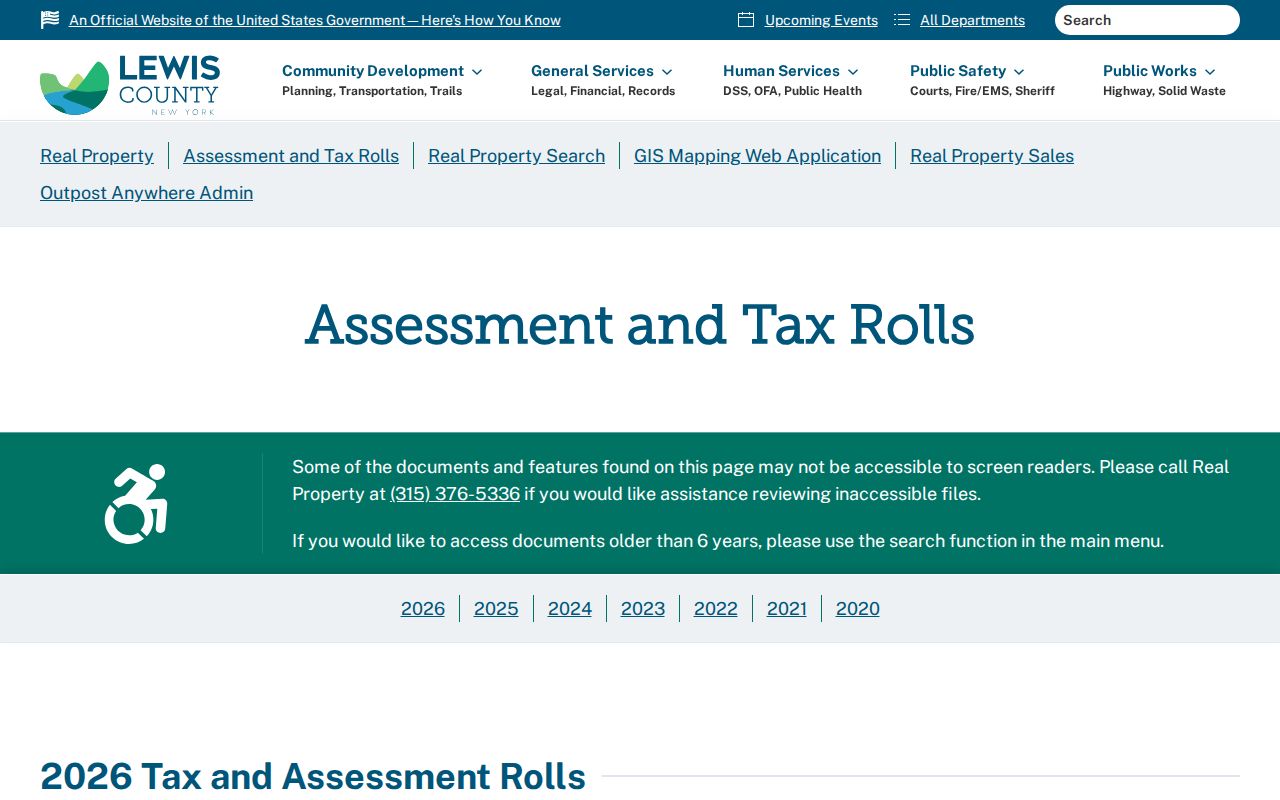
Note: Always record the source date beside any value, because a tentative assessment and a final assessment reflect different stages that should not be compared directly.
Follow Billing, Collection and Delinquency Status
The county tax page describes an online lookup by owner or parcel ID. County, town, school and village taxes run on different billing and collection schedules. Confirm the owner, property location and bill year before reading a paid or outstanding status. A payment submitted yesterday may take time to appear. A delinquent item can shift from the original collector to the Treasurer. Read Lewis County's tax lookup instructions before relying on any bill screen.
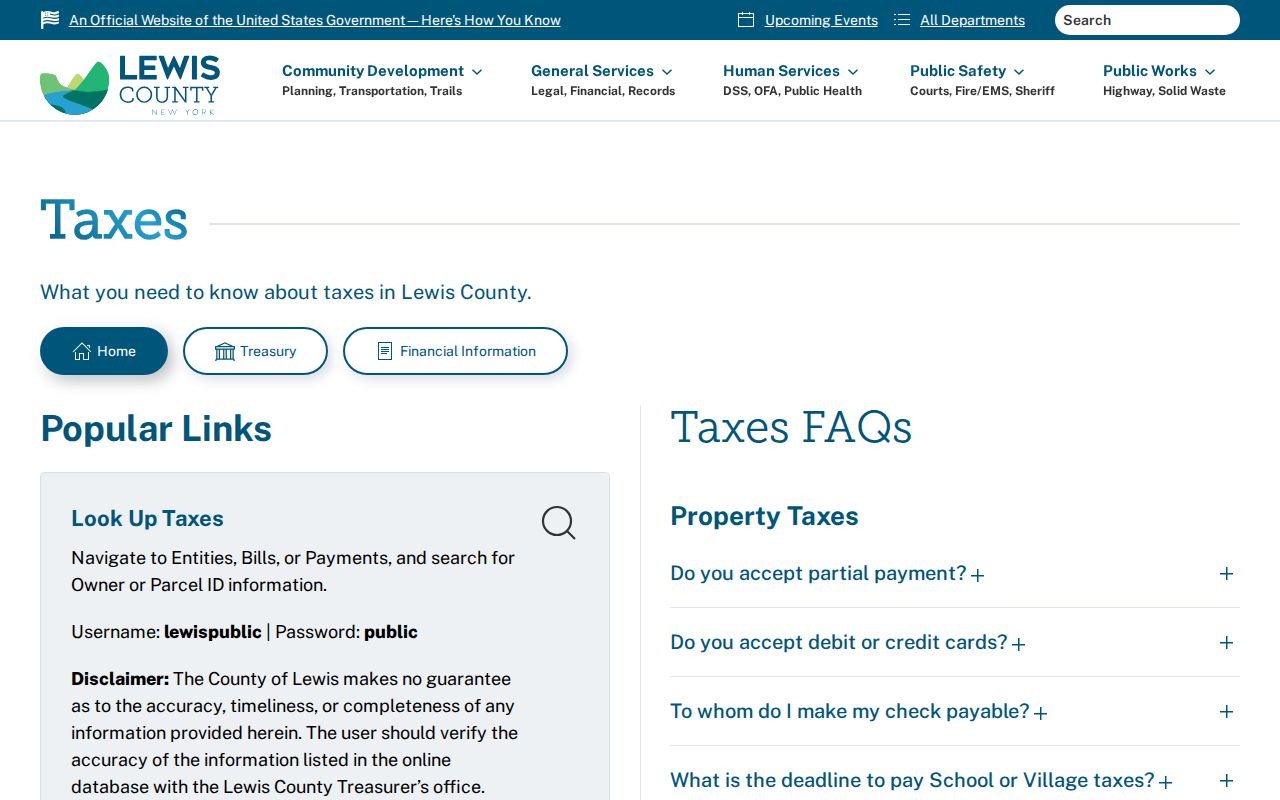
For an authoritative delinquency total, deadline or payoff, contact the issuing collector or the County Treasurer. Keep the confirmation date. Interest and status can change quickly. A tax lien, foreclosure filing or sale calls for additional Clerk and court research, and delinquency by itself never proves that title actually transferred.
Interpret Assessed, Taxable and Full Value
Assessed value is the administrative figure on the roll. Taxable value reflects exemptions and other adjustments. Full-value estimates depend on the level of assessment. None of these is automatically the price a buyer would pay. Nor is it the amount on the latest deed or a licensed appraiser's conclusion. Compare sales with similar class, use, location and date. Check whether a transfer was truly arm's length.
The county's sales report lists tax-map number, class, and consideration. It also shows sale date, recording date and parcel count. Not every transaction belongs in a trend. Family, estate, nominal, multi-parcel and special-use transfers each need separate treatment. Croghan report rows show why: some cover two parcels. One involves an LLC with a non-residential class. Skip the unmatched deals when weighing a neighborhood's direction.
Exemptions can change taxable value without touching the parcel's physical characteristics. Read the actual exemption line. For eligibility, documentation and filing dates, contact the appropriate municipal assessor. An online roll reports only the result, never the applicant's private supporting file.
Prepare for the Lewis County Grievance Calendar
New York's tax year moves through taxable status, the tentative roll, grievance review, the final roll and later billing. Lewis County posts an assessment calendar and assessor list. Contact the correct assessor early. Inspect the parcel inventory before the grievance deadline. Useful evidence includes photographs, measurements, a survey, corrected property facts, repair records and comparable sales adjusted for meaningful differences.
State the value you want and why. A neighbor's lower bill may reflect a different exemption, class, level of assessment or taxing jurisdiction. Keep your submission and proof of delivery. Lewis County publishes no direct RP-524 link on its calendar page, so pull the current form and instructions from the county or New York taxation source. An undated copy is a gamble.
If ownership or acreage looks wrong, compare the final-roll date against the newest deed and GIS update. A recent buyer may not appear yet. A split or combination can leave the roll and the deed disagreeing for a season. GIS locates the parcel but never decides legal acreage. Carry documentary errors to the assessor and boundary disputes to the Clerk, a surveyor or an attorney.
Keep a Reproducible Tax Audit Note
For each Lewis County property search, save the tax-map number, assessing unit, roll year and stage. Add owner, exemptions, values and payment status. Keep the deed reference and access dates. That note prevents school-bill and county-bill mix-ups. It also gives the Treasurer or assessor enough detail to answer one precise question about the parcel.
Lewis County source capture
Lewis County's GIS mapping application shows the parcel layer visually. Treat it as orientation for the county property records route, and open the county GIS source before relying on a map result.
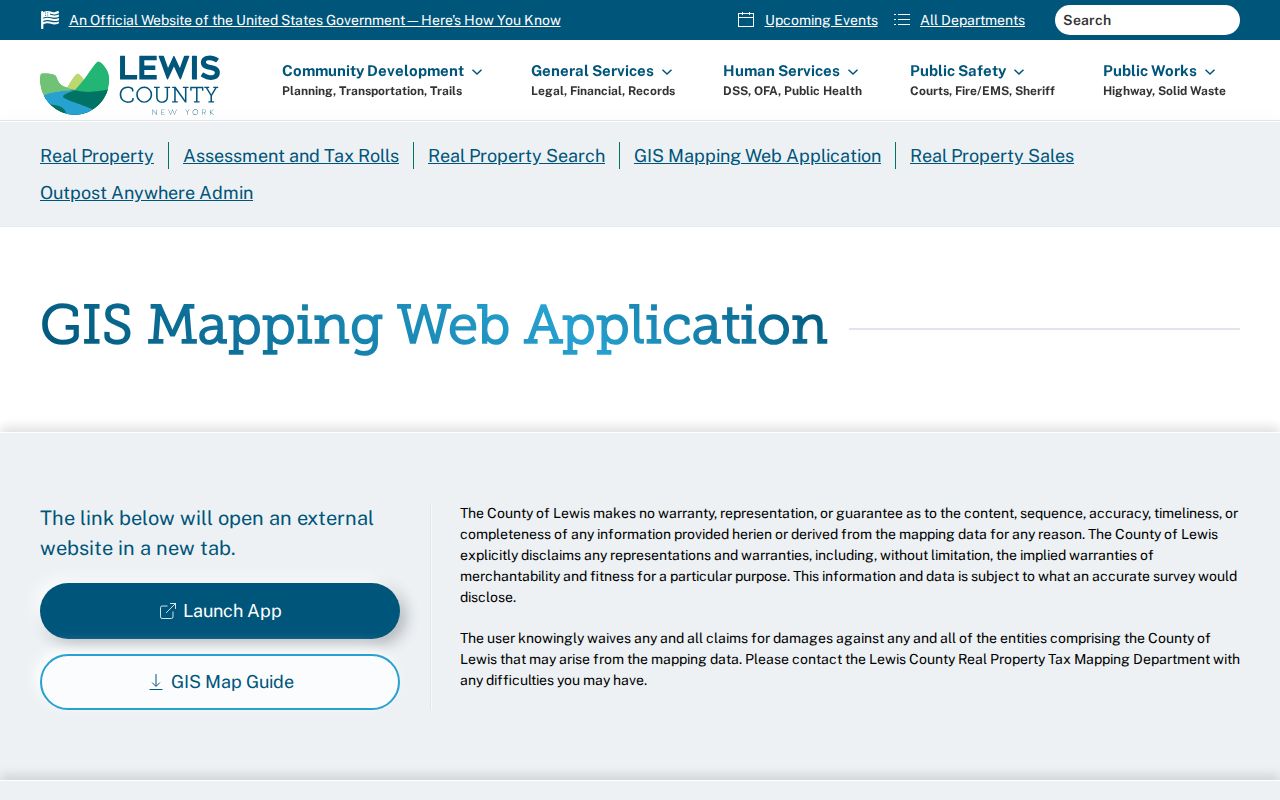
Use the county GIS page for orientation only. Confirm the live parcel, assessment date, municipality and tax-map number before you act, since online records can change.
Keep Tax, Title and Court Evidence Separate
A paid tax bill does not certify clear title. An unpaid bill proves no completed foreclosure. Use the Clerk index for liens, releases and conveyances. Turn to the relevant court system for litigation, and match every deed or tax result by party, parcel, municipality and date. When a deadline matters, get a dated payoff straight from the Treasurer or collector. Interest and procedural status can shift. Keep receipts and confirmation numbers apart from assessment evidence. Payment records show collection activity; the roll and grievance file explain how taxable value was set. When you request a correction, name the issue as ownership, acreage, exemption, valuation, allocation or payment posting.
Final tax check: Confirm the parcel number, bill year, collector and date of the balance directly from the official source. Save the response with the roll entry and deed reference so a later reader can distinguish valuation, billing, payment and ownership evidence.